Moving toward a more inclusive future during National Indigenous History Month
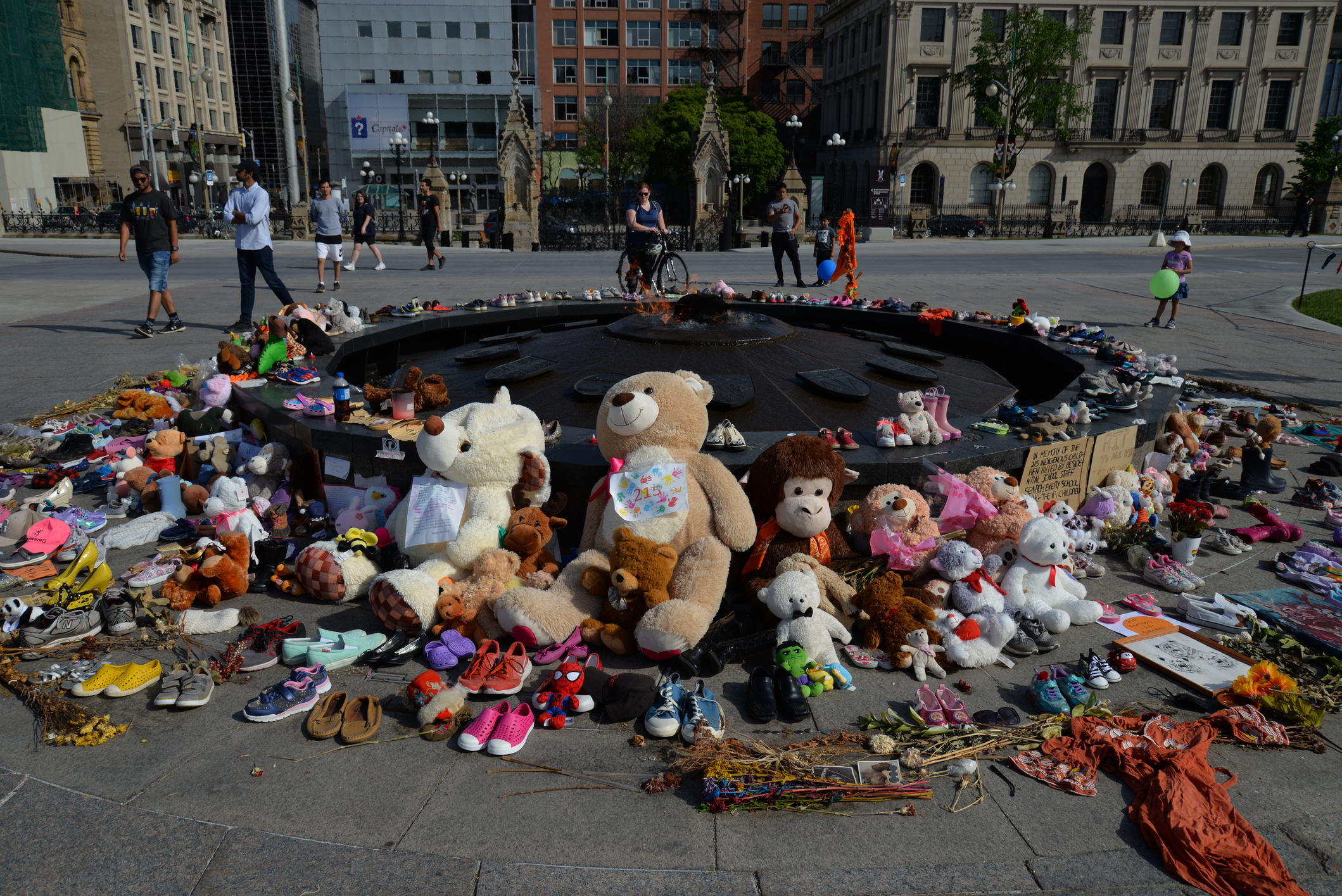
The growing memorial for the victims of Canada’s Residential Schools.
Small steps forward on a long journey

But despite these gains, there’s still a long way to go to truly understand what Indigenous inclusion – both within Canada and in day-to-day life – looks like. Kretschmer says paving a path forward that honours concepts from the Two Row Wampum will involve a lot of work to understand what self-determination and Indigenous rights look like, both from a legal and inherent perspective.
“There’s a long journey ahead for both Canadians and Indigenous people to understand what a new Canada looks like,” she says. “What does a New Turtle Island look like with respect to greater inclusion, understanding and empathy?” For some Indigenous people, Turtle Island refers to the continent of North America. The name is derived from various Indigenous oral histories that tell the story of a turtle that holds the world on its back.
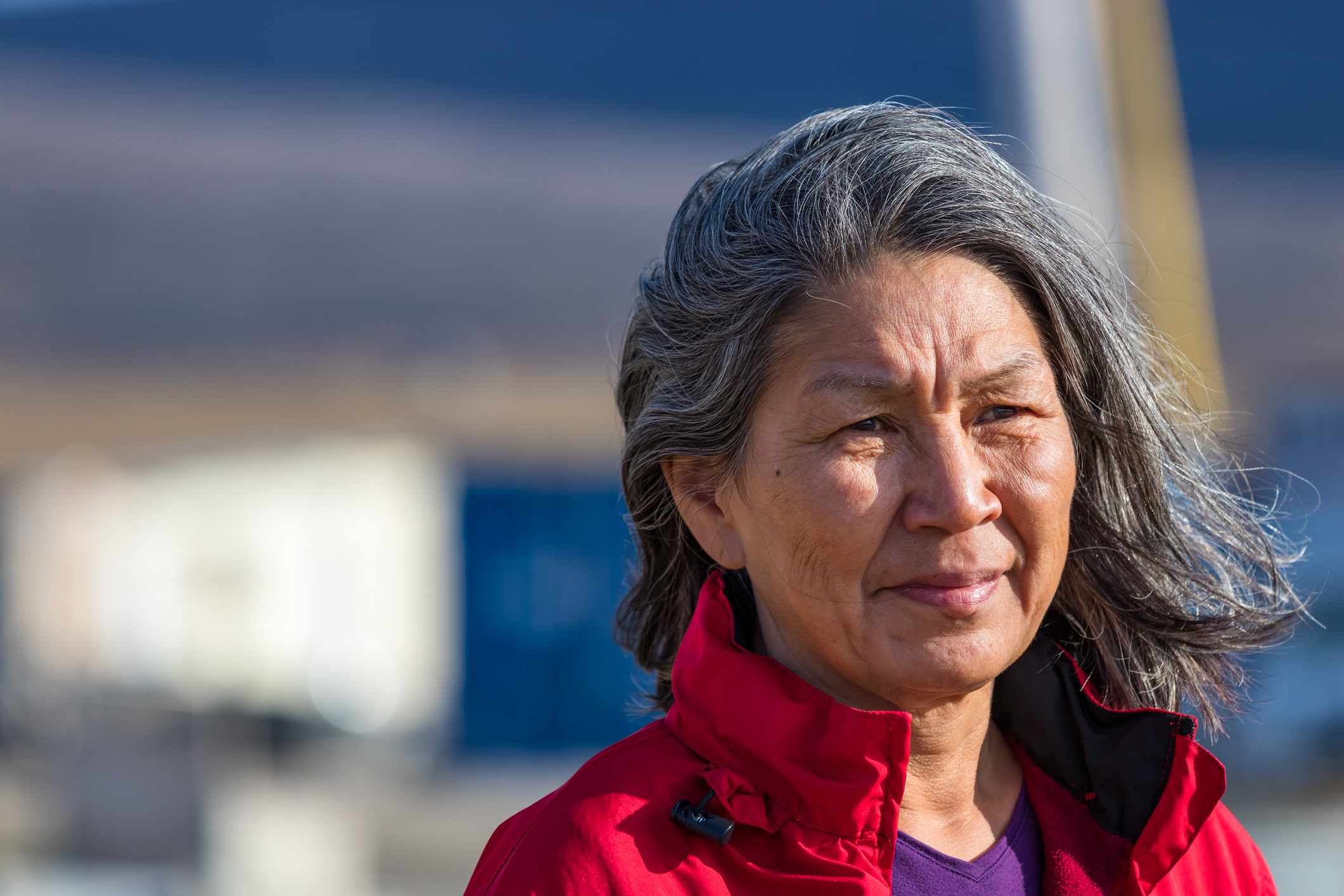
Portrait of a local Inuk woman in Clyde River, Nunavut, Canada.
Kretschmer says one starting point is the education system, noting that entire generations have been miseducated and are passing this on to their children. Correcting this involves the federal government mandating that every province and territory reimagine its curriculum, and that this is consistently applied across the board. Re-educating children across the country is the only way to cultivate true awareness and understanding among future generations, Kretschmer notes.
Wyandot artist Nichole Leveck says we should also examine the Canadian citizenship test and consider what information newcomers to Canada are required to know. “There needs to be an understanding that Canada is not experienced the same by our Nations,” says Leveck, who also works as a coordinated service planner with 2 Spirited People of the 1st Nations, a partner of Surrey Place. Leveck questions why newcomers to the country aren’t required to learn about the Wampum belts, which Indigenous people used to record treaties.
She also believes that consultation with Indigenous communities should take place before any interactions with the land, noting that some environmental problems we’re dealing with today might not have happened if there had been consultation with Indigenous people first. “If that was implemented right from the beginning of settlement, the Don River would still be healthy and we would still be able to drink from it,” says Leveck.
Reimagining the future
A long, arduous road lies ahead. Undertaking the important work of reconciliation means Indigenous people need to be heard, seen, and included at every turn, in all discussions. To this end, social media has proven invaluable by providing a platform for Indigenous activists. Social media apps like TikTok provide an outlet for Indigenous people to express themselves, increase visibility and provide access to a wider audience, while also promoting a sense of belonging.
Fox points to young Indigenous activists and artists representing in important ways on social media. Examples include Indigenous artist and educator James Jones (who is also known as Notorious Cree) and Inuk singer and activist Shina Novalinga. As young people leverage social channels to talk about important issues, this is ultimately having an impact on policy.
“I think what we’re seeing is a reclamation of real self-determination and it’s happening via vessels that I would have never imagined,” says Fox, adding that TikTok and Instagram are “fueling the revolution right now among young people.”
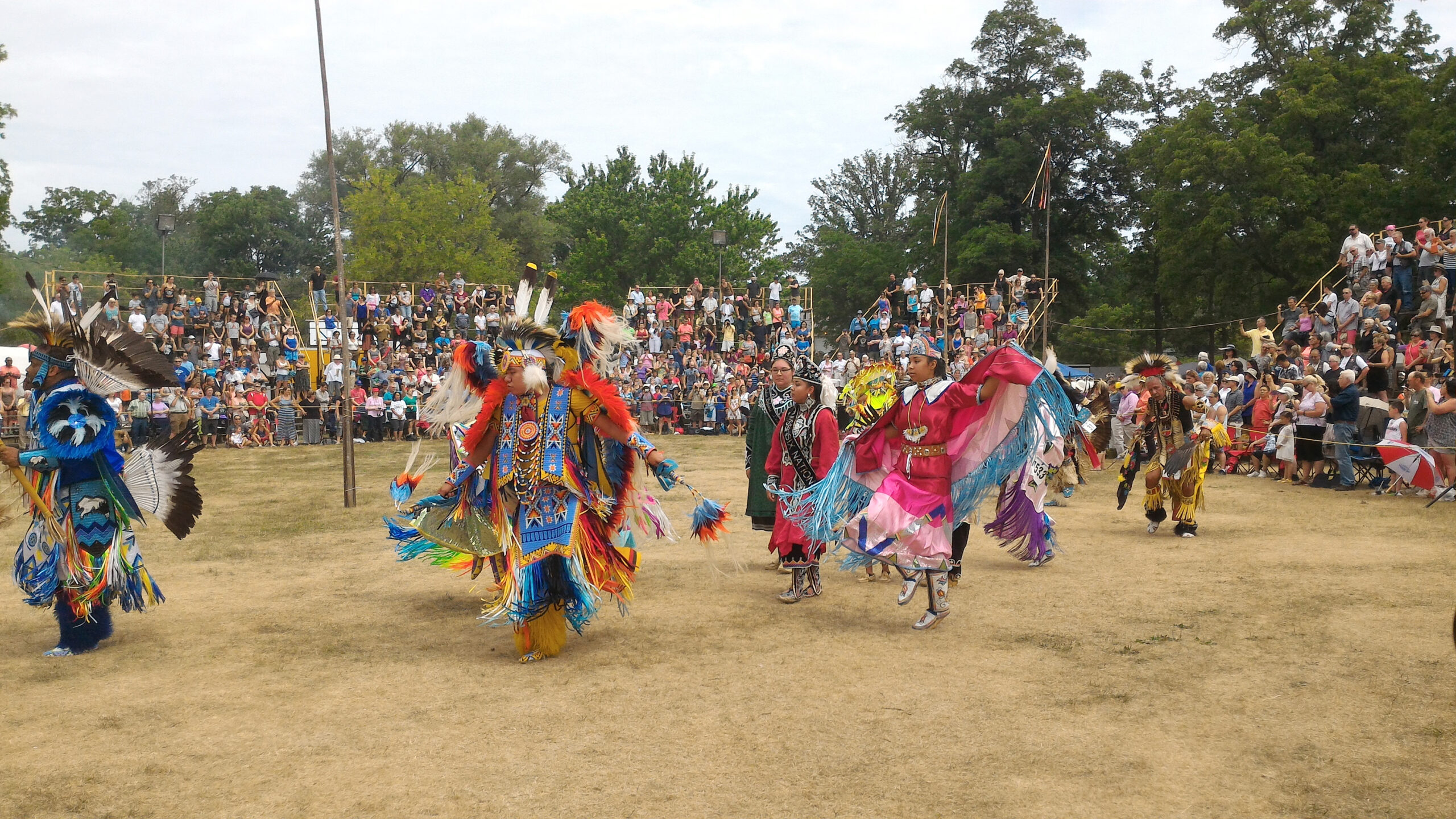
Six Nations Turtle Island powwow gate opening.
Answering this involves examining our past, discussing problems that persist and must be addressed in the present, and imagining how Indigenous people will exist in the future.
According to Kretschmer, the way forward for Canada lies in the restoration of the Two Row Wampum, one of the oldest treaty relationships between the Onkwehonweh (original people) of Turtle Island (North America) and European immigrants.
“It is the restoration of our original ways of knowing, seeing, being and doing, in parallel and equal to the rest of Canada,” she says. Achieving this entails the reassembly of Indigenous ways of behaving and living. “It’s our overall well-being and the totality of what it means to be Indigenous.”
Building awareness and promoting inclusion: what Canadians can do
National Indigenous History Month is an opportunity to deeply consider our own origin stories and personal history. “I hope Canadians reflect each and every day on their origin stories and tie themselves not only to the concept of being Canadian, but the concept of legacy,” says Fox. While all Canadians have origin stories that connect them to their native lands, they must also allow space for Indigenous narratives to shine through. “We have the opportunity this month to look to Indigenous people and see where they are leading the way,” says Fox.
Although several large-scale systemic issues need to be addressed at the government level, there are steps individual Canadians can take to deepen their understanding and become better allies to the First Nations, Métis, and Inuit peoples. Fox recommends engaging with Indigenous content, available on streaming platforms like CBC Gem, Amazon Prime, Hulu and Netflix Canada.
“If you love pop culture, then watch Reservation Dogs, or host a movie night and just take in Indigenous content,” she says. “Watching how we make our own content is a beautiful way to start.” She recommends listening to Indigenous music, seeking out perspectives on the news by Indigenous journalists, and supporting Indigenous businesses.
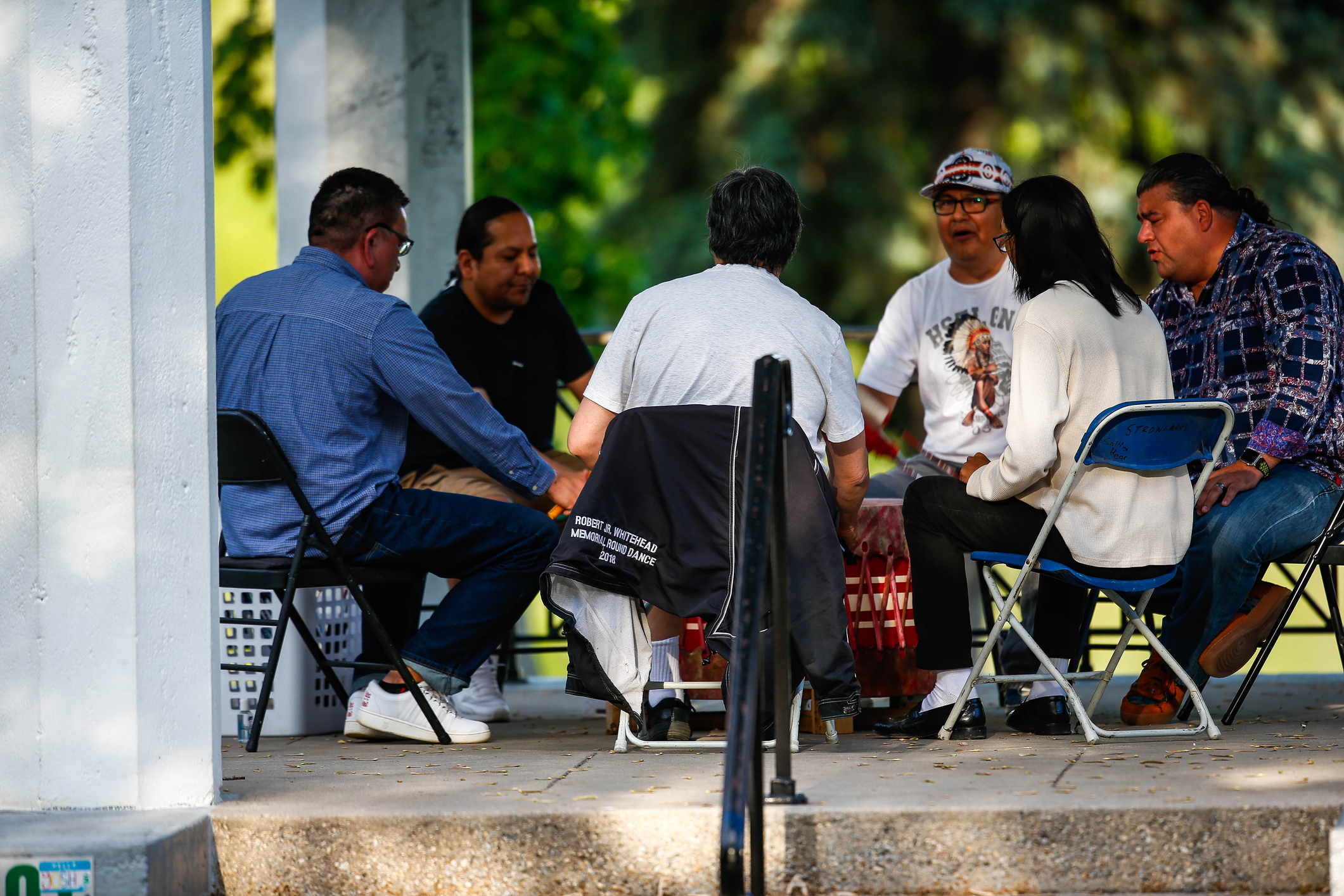
A drum circle takes place on the Vimy Memorial Band Shell in Saskatoon, Saskatchewan.
Canadians can also cultivate greater awareness and understanding by getting to know Indigenous people who live within their community. To help promote change, Fox recommends finding out whether local schools offer an Indigenous language program; if none exists, she suggests finding out how to make one happen.
Social services and advocacy groups help address inequities by employing Indigenous staff, providing accessible services to Indigenous communities, and supporting marginalized Indigenous community members, including those who identify as 2SLGBTQ+, live with a developmental disability or are coping with a mental health challenge.
Two community organizations that Surrey Place works closely with include:
- 2-Spirited People of the 1st Nations, which offers counselling, support and recreation opportunities
- Toronto Aboriginal Support Services Council, which addresses the social determinants of health through research, policy and advocacy
Finally, Canadians should proactively advocate for Indigenous people to have equal representation within all spheres of daily life, according to Kretschmer. “If you can get into a room that I can’t get in, then advocate for us to have a seat at that table,” she says.
Referencing an article she once read, Kretschmer says that meaningful allyship means being more of an accomplice. “I like that term better because it means that you’re down to do whatever needs to be done,” she says. “True allyship means you’re going with us on that journey.”

 Invert Colors
 Dark Contrast
 Low Saturation
 Highlight Links
 Text Spacing
 Text Size
 Readable Font
 Reading Cursor
 Line Height
 Text Alignment
 Align Left
 Align Center
 Justify Text